

Research suggests that brain damage may develop when individuals consume high levels of alcohol over a prolonged period.
How Much?
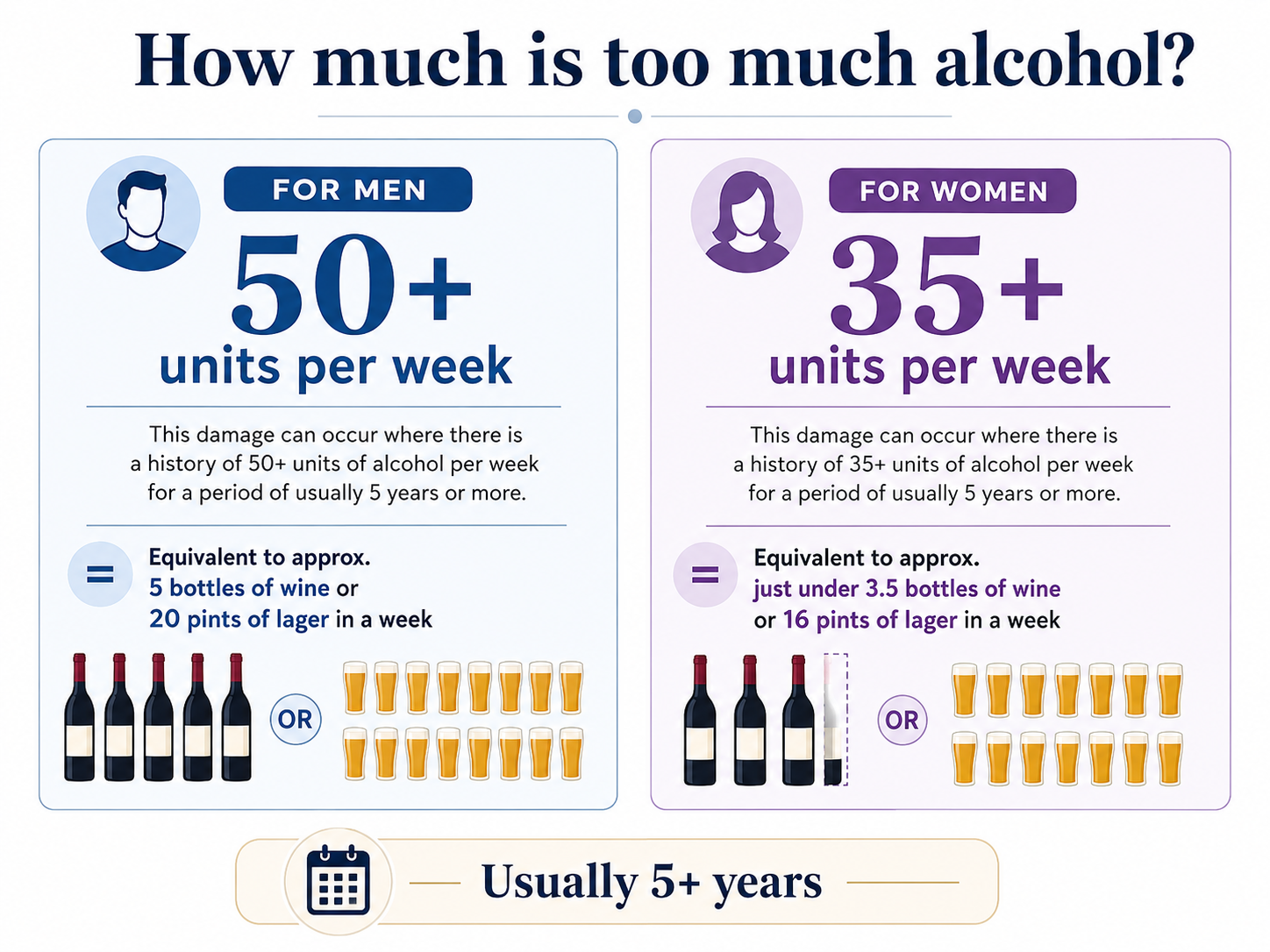
For men: This damage can occur where there is a history of 50+units of alcohol per week for a period of usually 5 years or more (equivalent to approx. 5 bottles of wine or 20 pints of lager in a week)
For women: This damage can occur where there is a history of 35+ units of alcohol per week for a period of usually 5 years or more (equivalent to approx. just under 3.5 bottles of wine or 16 pints of lager in a week)
Vulnerability varies significantly between individuals.
Some people may develop neurological damage sooner depending on factors such as nutrition, liver health, and overall physical wellbeing.
The Risks
Poor Nutrition
Alcohol misuse is frequently associated with inadequate nutrition, which can lead to deficiencies in essential vitamins, particularly Thiamine (Vitamin B1). Thiamine deficiency is a major contributor to alcohol-related brain injury.
Unassisted or Poorly Managed Detoxification
Attempting to stop drinking without medical supervision can have serious and potentially life-threatening consequences, including severe withdrawal syndromes and neurological complications.
Repeated Alcohol-Related Hospital Admissions
Three or more alcohol-related admissions within one year, sometimes described as a “revolving door” pattern of hospitalisation or
Two alcohol-related admissions within a 30-day period indicates a pattern of severe dependency and increasing neurological risk.
Acute Neurological Symptoms
Individuals presenting with symptoms such as:
- Severe confusion
- Disorientation
- Agitation
Sudden changes in cognition may require urgent medical assessment, as these symptoms can indicate acute neurological complications such as Wernicke’s encephalopathy.
Associated Medical Complications
The risk of ARBI increases when alcohol misuse occurs alongside other medical conditions, including:
- Head injury (traumatic brain injury)
- Liver disease
- Seizures
- Other serious illnesses or trauma
Concerns Raised by Family, Friends or Professionals
When those who know the individual well report significant changes in memory, thinking or ability to care for themselves, this may be an early indicator of cognitive impairment.
Social Isolation and Lack of Support
Individuals living without stable social support networks are particularly vulnerable. This may include people:
- Living alone with minimal family contact
- Residing in hostels or temporary accommodation
- Experiencing homelessness
Absence of support is important because it can delay identification of cognitive decline and reduce the likelihood of early intervention.
Recognising the risk factors for ARBI can help legal professionals consider whether a client’s difficulties may reflect underlying neurological impairment rather than lack of cooperation or poor reliability.
It may also help identify whether clients’ require adjustments in communication or additional support to fully engage in legal discussions and decision-making.
This might include simple steps such as:
- Simplify your explanations – Allow additional time for consultations
- Check clients’ understanding more frequently
- Encourage clients to write a summary note of key information or write a summary note for your client
- Invite a family member/next friend to assist in consultations (with consent)
- Consider whether clinical/medical assessment is necessary depending on your concerns about cognitive functioning.
These steps can help ensure that clients are able to meaningfully participate in decisions that affect them.

If you have concerns about your client, and believe they would benefit from a neuropsychological assessment, you can reach out with instructions to admin@psychologicalpathways.com or make a referral via our website here